
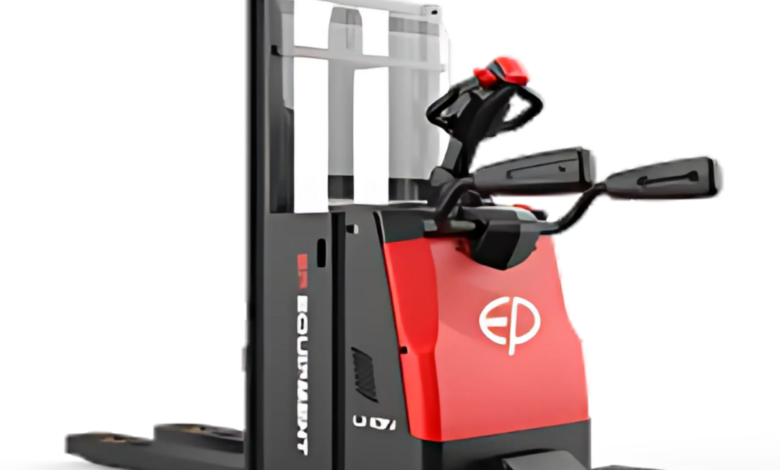
Modern storage facilities need equipment that can lift and position pallets efficiently while making good use of available floor space. Electric Pallet Stackers provide powered assistance for lifting, stacking, and short-distance movement. For businesses managing regular pallet operations, Electric Pallet Stackers can reduce manual effort and support more consistent workflows. Chandigarh Engineering Corp helps businesses assess equipment requirements according to load capacity, storage height, aisle conditions, operating hours, and workplace layout. A practical selection process can improve handling efficiency while supporting safer movement across warehouses, workshops, distribution centers, and production areas.
Where Electric Pallet Stackers Add Value
Storage operations often involve repeated lifting and positioning tasks. Powered equipment can simplify these activities, particularly where goods must be placed at different rack levels. Electric Pallet Stackers can suit facilities that need controlled lifting without relying entirely on manual force.
Their compact design can help businesses manage materials where larger machines have limited access. Teams should review available space, pallet dimensions, load weights, and lifting frequency.
Capacity, Height, and Workplace Fit
Every application has different handling demands. Load weight and lifting height should therefore remain central to equipment selection. A machine must safely support the expected load while reaching the required storage position.
When comparing Electric Pallet Stackers, businesses should examine rated capacity, maximum lift height, fork dimensions, turning radius, and overall machine dimensions. Matching these specifications with the warehouse layout can improve control and reduce operational limitations.
Improving Warehouse Space Utilization
Vertical storage allows businesses to use available floor area more effectively. However, stacking requires suitable equipment and adequate clearance around racks, ceilings, and pathways.
With Electric Pallet Stackers, operators can position pallets at appropriate heights while maintaining a controlled workflow. Proper aisle planning remains essential. Storage locations should provide enough room for safe turning, lifting, and pallet placement without creating unnecessary congestion.
Electric Pallet Stackers for Daily Productivity
Powered lifting can help reduce repeated physical effort during regular warehouse activities. This advantage becomes more noticeable when employees handle multiple pallets across a shift.
Businesses using Electric Pallet Stackers can organize receiving, storage, picking, and dispatch processes around predictable movement routes. Clear task allocation can improve equipment utilization. Operators should avoid overloading machines or using them outside their intended application.
Battery and Charging Requirements
Electric equipment depends on an appropriate power source and charging routine. Businesses should consider operating hours, charging time, battery capacity, and available charging space before selecting a machine.
For facilities operating Electric Pallet Stackers across multiple shifts, charging plans should support daily schedules. Operators should follow manufacturer recommendations for charging, inspection, storage, and battery care. A planned routine can reduce interruptions and support availability.
Forklift Batteries for Reliable Equipment Operation
Businesses researching Forklift Batteries should review capacity, compatibility, charging requirements, operating cycles, and workplace conditions. Suitable batteries support dependable equipment use, while proper charging and routine inspection help maintain performance. Battery handling should always follow the applicable manufacturer recommendations and workplace safety procedures.
Operator Controls and Ergonomic Design
Equipment should be comfortable and straightforward to operate. Handle design, control placement, visibility, steering response, and braking performance can influence how confidently an operator performs routine tasks.
When evaluating Electric Pallet Stackers, businesses can review ergonomic features alongside technical specifications. Operators should receive training before using equipment. Training can cover load positioning, steering, lifting, braking, and safe travel.
Safety Features and Workplace Procedures
Equipment safety depends on both machine features and workplace discipline. Emergency controls, braking systems, warning indicators, visibility, and stable load handling can support safer operations.
Businesses using Electric Pallet Stackers should establish clear pedestrian routes and maintain suitable aisle clearance. Regular inspections can identify damaged forks, worn wheels, control issues, or unusual behavior. Prompt maintenance can address problems before they affect wider operations.
Maintenance That Supports Long-Term Use
Preventive maintenance helps preserve equipment performance. Inspection schedules may include wheels, forks, chains, lifting mechanisms, electrical connections, controls, and braking components. Maintenance teams can also record operating hours and recurring issues.
When sourcing Electric Pallet Stackers, businesses should consider spare parts availability and service support. Chandigarh Engineering Corp can help businesses review material handling requirements and related equipment considerations. Reliable service planning can reduce avoidable downtime and simplify routine maintenance.
Applications Across Industrial Facilities
Warehouses, distribution centers, manufacturing units, retail storage areas, and workshops may have different pallet handling requirements. Equipment selection should reflect the environment rather than follow a universal approach.
For suitable applications, Electric Pallet Stackers can support vertical storage and controlled pallet movement. Businesses should assess floor conditions, load characteristics, rack configuration, and working schedules before purchase. This information can help teams choose equipment that fits operational needs.
Creating an Organized Handling Process
Equipment performs best when supported by a clear workflow. Businesses can identify movement areas, define travel routes, assign storage locations, and establish inspection routines.
Integrating Electric Pallet Stackers into this process can support consistent pallet movement. Teams can monitor utilization and maintenance records to identify future requirements. Good organization helps operators work with fewer unnecessary movements.
Conclusion
Efficient pallet handling requires suitable equipment, trained operators, planned maintenance, and a well-organized workplace. Businesses considering Electric Pallet Stackers can assess capacity, lifting height, maneuverability, battery requirements, safety features, service support, and ownership costs. Chandigarh Engineering Corp can support practical equipment evaluation for industrial material handling applications. With careful planning, powered stacking equipment can improve storage processes, reduce manual effort, and support dependable daily operations.